Buy minimap.eu ?
We are moving the project
minimap.eu .
Are you interested in purchasing the domain
minimap.eu ?
domain@kv-gmbh.de · 0541-91531010
Buy minimap.eu ?
'Salts or molecules?'
Salts are compounds formed from the reaction of an acid and a base, while molecules are made up of atoms bonded together. Salts are ionic compounds, meaning they are made up of ions, while molecules can be either ionic or covalent compounds. Salts have a specific crystalline structure and are often soluble in water, while molecules can have a wide range of physical properties and solubilities. Overall, salts and molecules are distinct types of chemical compounds with different structures and properties. **
Which of the following molecules are dipole molecules and why?
Molecules that have a dipole moment are considered dipole molecules. A dipole moment occurs when there is an uneven distribution of electron density within a molecule, resulting in a partial positive and partial negative charge. For example, molecules like water (H2O) and ammonia (NH3) are dipole molecules because of their polar covalent bonds, which create a separation of charge within the molecule. On the other hand, molecules like carbon dioxide (CO2) and methane (CH4) are nonpolar and do not have a dipole moment because the electronegativity of the atoms cancel each other out, resulting in a symmetrical distribution of charge. **

Similar search terms for Molecules
Top-Angebote
Products related to Molecules:
-
Zoblit Explore & Experience Dubai: A Family Perspective by Tim Blinks - Paperback Travel Guide - Honest Family Travel Insight for a Dubai HolidayExplore Dubai: A Family Perspective is a candid and practical travel account written for families planning a trip to Dubai. Author Tim Blinks draws on real family experience to guide readers through Dubai's attractions, culture, and everyday logistics. This book offers an accessible companion for parents weighing up where to take their children next. It's a useful addition to any travel bookshelf before a Gulf holiday. Written from a first-hand family viewpoint, this paperback shares practical insight into traveling to Dubai with children. Rather than simply listing hotels and landmarks, the narrative reflects on what actually works for families on the ground — from managing the heat and choosing activities suited to different age groups, to navigating the city's mix of ultra-modern development and traditional culture. The book is published by Zoblit and has the ISBN 9781911147411.2,99 £*Shipping: 2,99 £Secure redirect to the provider
-
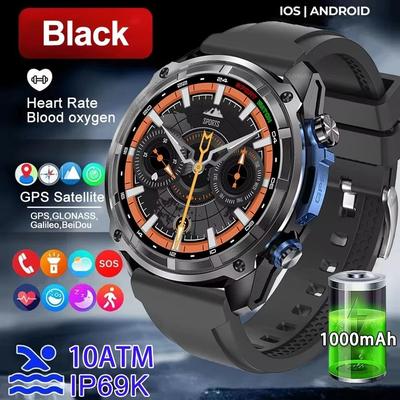
Uplift Picks Offline Map GPS Navigation Smartwatch With 10ATM Waterproof Military Outdoor Sports Watch black gps Offline MapExplore with confidence using this powerful offline map smartwatch built for serious outdoor performance. Designed for adventurers and active users, it offers reliable navigation without needing constant connectivity. With advanced GPS navigation...277,98 $*Shipping: 0,00 $Secure redirect to the provider
-
Uplifted Finds 2026 Tactical Offline Map Smartwatch 4GB Route Navigation & GPS Executive 10ATM Waterproof Military Outdoor System orange"Inaugurate a powerful ""IntelligenceSanctuary"" energy in your environment with our ultimate 2026 tactical solution. The 2026 Military Offline Map Smartwatch is the ultimate designer choice for creating a ""PrecisionModern"" or ""ExecutiveStudioLuxe""..."316,97 $*Shipping: 0,00 $Secure redirect to the provider
-
Uplifted Finds 2026 Tactical Offline Map Smartwatch 4GB Route Navigation & GPS Executive 10ATM Waterproof Military Outdoor System blue"Inaugurate a powerful ""IntelligenceSanctuary"" energy in your environment with our ultimate 2026 tactical solution. The 2026 Military Offline Map Smartwatch is the ultimate designer choice for creating a ""PrecisionModern"" or ""ExecutiveStudioLuxe""..."316,97 $*Shipping: 0,00 $Secure redirect to the provider



-
What is the difference between compound molecules and element molecules?
Compound molecules are made up of two or more different elements chemically bonded together, such as water (H2O) or carbon dioxide (CO2). Element molecules, on the other hand, are made up of two or more atoms of the same element bonded together, such as oxygen (O2) or nitrogen (N2). In compound molecules, the atoms are different, while in element molecules, the atoms are the same. **
-
Why do heptan-1-ol molecules and water molecules not mix?
Heptan-1-ol molecules and water molecules do not mix well because heptan-1-ol is a nonpolar molecule, while water is a polar molecule. Nonpolar molecules are not attracted to polar molecules, so they do not easily mix. Additionally, heptan-1-ol is hydrophobic, meaning it repels water, further preventing the two substances from mixing. This is due to the difference in the polarity and intermolecular forces between the two substances. **
-
Why are water molecules permanent dipoles and carbon dioxide molecules not?
Water molecules are permanent dipoles because they have a bent molecular shape with unequal sharing of electrons between the oxygen and hydrogen atoms. This results in a partial negative charge on the oxygen atom and partial positive charges on the hydrogen atoms, creating a permanent dipole moment. On the other hand, carbon dioxide molecules are not permanent dipoles because they have a linear molecular shape with symmetrical distribution of the two oxygen atoms and the carbon atom. This results in equal sharing of electrons and no permanent dipole moment. **
-
How are molecules recognized?
Molecules are recognized through specific interactions between their chemical structures and complementary binding sites on other molecules. This recognition process involves the formation of non-covalent bonds such as hydrogen bonds, van der Waals forces, and electrostatic interactions. The shape, size, and charge distribution of molecules play a crucial role in determining their recognition by other molecules. Additionally, specific functional groups and chemical properties can also contribute to the recognition process. **


How are molecules formed?
Molecules are formed through chemical bonding between atoms. Atoms can either share electrons to form covalent bonds or transfer electrons to form ionic bonds. The type of bonding that occurs depends on the elements involved and their tendency to gain, lose, or share electrons. Once atoms are bonded together, they form a stable structure known as a molecule. **
Search for dipole molecules.
Dipole molecules are molecules that have a separation of positive and negative charges within the molecule. This separation creates a dipole moment, which results in the molecule having a positive end and a negative end. Examples of dipole molecules include water (H2O), hydrogen chloride (HCl), and ammonia (NH3). These molecules are important in various chemical reactions and interactions due to their polar nature. **
Top-Angebote
Products related to Molecules:
-
Uplifted Finds 2026 Tactical Offline Map Smartwatch 4GB Route Navigation & GPS Executive 10ATM Waterproof Military Outdoor System black"Inaugurate a powerful ""IntelligenceSanctuary"" energy in your environment with our ultimate 2026 tactical solution. The 2026 Military Offline Map Smartwatch is the ultimate designer choice for creating a ""PrecisionModern"" or ""ExecutiveStudioLuxe""..."316,97 $*Shipping: 0,00 $Secure redirect to the provider
-
Arkham Travel Guide by Crowd Games - Board Game of Route-Building and Shared DecisionsExplore the grim and mysterious streets of Arkham, Massachusetts, in this atmospheric board game of route-building and shared decisions. Players act as guides, creating tour routes through a city filled with curious shops, mysterious gates, and unsettling locations. During play, dice determine the available choices, and players work together to decide where tourists can be drawn and how routes develop across the city. The changing dice results encourage discussion and create a different challenge from game to game. This game is set in the fictional city of Arkham, inspired by eerie mystery and dark fantasy. It's a great choice for fans of thematic board games and those who enjoy working together to achieve a common goal.18,15 £*Shipping: 3,95 £Secure redirect to the provider
-
Zoblit Explore & Experience Dubai: A Family Perspective by Tim Blinks - Paperback Travel Guide - Honest Family Travel Insight for a Dubai HolidayExplore Dubai: A Family Perspective is a candid and practical travel account written for families planning a trip to Dubai. Author Tim Blinks draws on real family experience to guide readers through Dubai's attractions, culture, and everyday logistics. This book offers an accessible companion for parents weighing up where to take their children next. It's a useful addition to any travel bookshelf before a Gulf holiday. Written from a first-hand family viewpoint, this paperback shares practical insight into traveling to Dubai with children. Rather than simply listing hotels and landmarks, the narrative reflects on what actually works for families on the ground — from managing the heat and choosing activities suited to different age groups, to navigating the city's mix of ultra-modern development and traditional culture. The book is published by Zoblit and has the ISBN 9781911147411.2,99 £*Shipping: 2,99 £Secure redirect to the provider
-
Uplift Picks Offline Map GPS Navigation Smartwatch With 10ATM Waterproof Military Outdoor Sports Watch black gps Offline MapExplore with confidence using this powerful offline map smartwatch built for serious outdoor performance. Designed for adventurers and active users, it offers reliable navigation without needing constant connectivity. With advanced GPS navigation...277,98 $*Shipping: 0,00 $Secure redirect to the provider
-
'Salts or molecules?'
Salts are compounds formed from the reaction of an acid and a base, while molecules are made up of atoms bonded together. Salts are ionic compounds, meaning they are made up of ions, while molecules can be either ionic or covalent compounds. Salts have a specific crystalline structure and are often soluble in water, while molecules can have a wide range of physical properties and solubilities. Overall, salts and molecules are distinct types of chemical compounds with different structures and properties. **
-
Which of the following molecules are dipole molecules and why?
Molecules that have a dipole moment are considered dipole molecules. A dipole moment occurs when there is an uneven distribution of electron density within a molecule, resulting in a partial positive and partial negative charge. For example, molecules like water (H2O) and ammonia (NH3) are dipole molecules because of their polar covalent bonds, which create a separation of charge within the molecule. On the other hand, molecules like carbon dioxide (CO2) and methane (CH4) are nonpolar and do not have a dipole moment because the electronegativity of the atoms cancel each other out, resulting in a symmetrical distribution of charge. **
-
What is the difference between compound molecules and element molecules?
Compound molecules are made up of two or more different elements chemically bonded together, such as water (H2O) or carbon dioxide (CO2). Element molecules, on the other hand, are made up of two or more atoms of the same element bonded together, such as oxygen (O2) or nitrogen (N2). In compound molecules, the atoms are different, while in element molecules, the atoms are the same. **
-
Why do heptan-1-ol molecules and water molecules not mix?
Heptan-1-ol molecules and water molecules do not mix well because heptan-1-ol is a nonpolar molecule, while water is a polar molecule. Nonpolar molecules are not attracted to polar molecules, so they do not easily mix. Additionally, heptan-1-ol is hydrophobic, meaning it repels water, further preventing the two substances from mixing. This is due to the difference in the polarity and intermolecular forces between the two substances. **
Similar search terms for Molecules
-
Uplifted Finds 2026 Tactical Offline Map Smartwatch 4GB Route Navigation & GPS Executive 10ATM Waterproof Military Outdoor System orange"Inaugurate a powerful ""IntelligenceSanctuary"" energy in your environment with our ultimate 2026 tactical solution. The 2026 Military Offline Map Smartwatch is the ultimate designer choice for creating a ""PrecisionModern"" or ""ExecutiveStudioLuxe""..."316,97 $*Shipping: 0,00 $Secure redirect to the provider
-
Uplifted Finds 2026 Tactical Offline Map Smartwatch 4GB Route Navigation & GPS Executive 10ATM Waterproof Military Outdoor System blue"Inaugurate a powerful ""IntelligenceSanctuary"" energy in your environment with our ultimate 2026 tactical solution. The 2026 Military Offline Map Smartwatch is the ultimate designer choice for creating a ""PrecisionModern"" or ""ExecutiveStudioLuxe""..."316,97 $*Shipping: 0,00 $Secure redirect to the provider
-
Uplifted Finds 2026 Tactical Offline Map Smartwatch 4GB Route Navigation & GPS Executive 10ATM Waterproof Military Outdoor System black Steel 2a"Inaugurate a powerful ""IntelligenceSanctuary"" energy in your environment with our ultimate 2026 tactical solution. The 2026 Military Offline Map Smartwatch is the ultimate designer choice for creating a ""PrecisionModern"" or ""ExecutiveStudioLuxe""..."331,97 $*Shipping: 0,00 $Secure redirect to the provider
-
Uplifted Finds 2026 Tactical Offline Map Smartwatch 4GB Route Navigation & GPS Executive 10ATM Waterproof Military Outdoor System black Mesh Belt 2a"Inaugurate a powerful ""IntelligenceSanctuary"" energy in your environment with our ultimate 2026 tactical solution. The 2026 Military Offline Map Smartwatch is the ultimate designer choice for creating a ""PrecisionModern"" or ""ExecutiveStudioLuxe""..."331,97 $*Shipping: 0,00 $Secure redirect to the provider
-
Why are water molecules permanent dipoles and carbon dioxide molecules not?
Water molecules are permanent dipoles because they have a bent molecular shape with unequal sharing of electrons between the oxygen and hydrogen atoms. This results in a partial negative charge on the oxygen atom and partial positive charges on the hydrogen atoms, creating a permanent dipole moment. On the other hand, carbon dioxide molecules are not permanent dipoles because they have a linear molecular shape with symmetrical distribution of the two oxygen atoms and the carbon atom. This results in equal sharing of electrons and no permanent dipole moment. **
-
How are molecules recognized?
Molecules are recognized through specific interactions between their chemical structures and complementary binding sites on other molecules. This recognition process involves the formation of non-covalent bonds such as hydrogen bonds, van der Waals forces, and electrostatic interactions. The shape, size, and charge distribution of molecules play a crucial role in determining their recognition by other molecules. Additionally, specific functional groups and chemical properties can also contribute to the recognition process. **
-
How are molecules formed?
Molecules are formed through chemical bonding between atoms. Atoms can either share electrons to form covalent bonds or transfer electrons to form ionic bonds. The type of bonding that occurs depends on the elements involved and their tendency to gain, lose, or share electrons. Once atoms are bonded together, they form a stable structure known as a molecule. **
-
Search for dipole molecules.
Dipole molecules are molecules that have a separation of positive and negative charges within the molecule. This separation creates a dipole moment, which results in the molecule having a positive end and a negative end. Examples of dipole molecules include water (H2O), hydrogen chloride (HCl), and ammonia (NH3). These molecules are important in various chemical reactions and interactions due to their polar nature. **
* All prices are inclusive of VAT and, if applicable, plus shipping costs. The offer information is based on the details provided by the respective shop and is updated through automated processes. Real-time updates do not occur, so deviations can occur in individual cases. ** Note: Parts of this content were created by AI.