Buy minimap.eu ?
We are moving the project
minimap.eu .
Are you interested in purchasing the domain
minimap.eu ?
domain@kv-gmbh.de · 0541-91531010
Buy minimap.eu ?
Do the planets fly in opposite directions?
No, the planets in our solar system do not fly in opposite directions. They all orbit the Sun in the same direction, which is counterclockwise as viewed from above the Earth's north pole. This is due to the way the solar system formed from a rotating disk of gas and dust. While some moons in the solar system may have retrograde orbits (orbiting in the opposite direction of their planet's rotation), the planets themselves all orbit the Sun in the same direction. **
What are crystal balls used for to explore planets?
Crystal balls are not typically used to explore planets. Instead, scientists use advanced technology such as telescopes, satellites, and rovers to study planets in our solar system and beyond. These tools provide valuable data and images that help researchers learn more about the composition, atmosphere, and surface features of planets. **

Similar search terms for Planets
Top-Angebote
Products related to Planets:
-
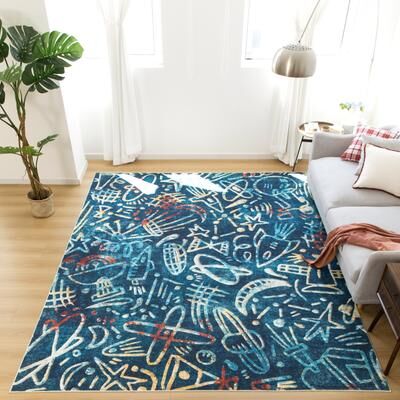
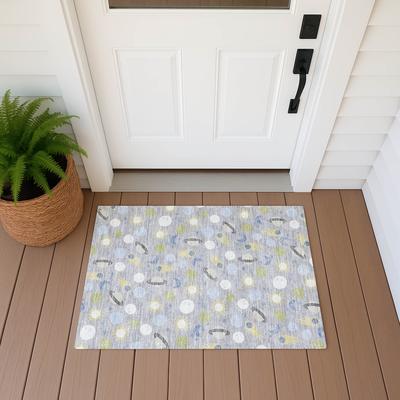
Addison Rugs Machine Washable Indoor/ Outdoor Planets Comets Chantille RugAdd a delightful touch to any transitional style with space motifs that ignite children's imaginations. Designed with an ultra-thin, flat weave, it fits effortlessly under doors, and boasts a non-skid backing that negates the need for an extra rug pad.37,99 $*Shipping: 0,00 $Secure redirect to the provider
-
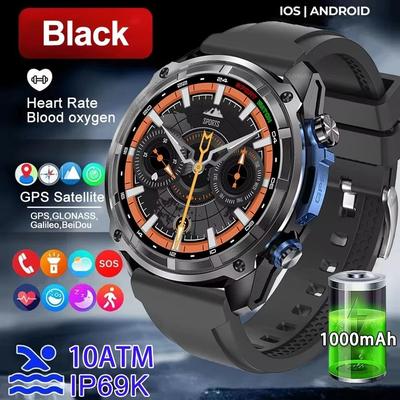
Uplifted Finds 2026 Tactical Offline Map Smartwatch 4GB Route Navigation & GPS Executive 10ATM Waterproof Military Outdoor System black"Inaugurate a powerful ""IntelligenceSanctuary"" energy in your environment with our ultimate 2026 tactical solution. The 2026 Military Offline Map Smartwatch is the ultimate designer choice for creating a ""PrecisionModern"" or ""ExecutiveStudioLuxe""..."316,97 $*Shipping: 0,00 $Secure redirect to the provider
-
Uplifted Finds 2026 Tactical Offline Map Smartwatch 4GB Route Navigation & GPS Executive 10ATM Waterproof Military Outdoor System blue"Inaugurate a powerful ""IntelligenceSanctuary"" energy in your environment with our ultimate 2026 tactical solution. The 2026 Military Offline Map Smartwatch is the ultimate designer choice for creating a ""PrecisionModern"" or ""ExecutiveStudioLuxe""..."316,97 $*Shipping: 0,00 $Secure redirect to the provider


-
Which of these planets would you like to explore?
I would like to explore Mars because it has always been a fascinating planet due to its potential for supporting life and its similarities to Earth. The possibility of finding evidence of past life or even current microbial life on Mars is an exciting prospect. Additionally, the unique geological features such as Olympus Mons, the largest volcano in the solar system, and Valles Marineris, the largest canyon, make Mars a compelling destination for exploration. **
-
Why are the inner planets rocky planets and the outer planets gas planets?
The inner planets, Mercury, Venus, Earth, and Mars, are rocky planets because they formed closer to the sun where it was hotter. The intense heat caused lighter elements like hydrogen and helium to be blown away, leaving behind heavier elements like rock and metal. In contrast, the outer planets, Jupiter, Saturn, Uranus, and Neptune, are gas planets because they formed farther from the sun where it was cooler. This allowed lighter elements to remain in their atmospheres, creating their gas giant composition. **
-
Are stars planets?
No, stars are not planets. Stars are massive celestial bodies that produce light and heat through nuclear fusion, while planets are smaller celestial bodies that orbit around stars. Stars are much larger and hotter than planets, and they are the primary sources of light and energy in a solar system. **
-
Are these planets?
No, the objects in the image are not planets. They appear to be moons or satellites orbiting a larger celestial body. Planets are celestial bodies that orbit a star, such as our sun, whereas moons are natural satellites that orbit planets. **


Why do gas planets have more moons than rocky planets?
Gas planets have more moons than rocky planets because their larger size and stronger gravitational pull allow them to capture and retain more moons. Additionally, gas planets are formed further from the sun where there is more material available for moon formation. The presence of a thick atmosphere on gas planets also helps in capturing passing objects and turning them into moons. **
Why are planets with life forms better than planets without?
Planets with life forms are better than planets without because they offer the potential for diverse ecosystems, which can contribute to the overall health and balance of the planet. Life forms also have the ability to adapt and evolve, making the planet more resilient to changes in the environment. Additionally, the presence of life forms can lead to the development of complex and intricate relationships within the ecosystem, enhancing the overall biodiversity and beauty of the planet. **
Top-Angebote
Products related to Planets:
-
Uplifted Finds 2026 Tactical Offline Map Smartwatch 4GB Route Navigation & GPS Executive 10ATM Waterproof Military Outdoor System orange"Inaugurate a powerful ""IntelligenceSanctuary"" energy in your environment with our ultimate 2026 tactical solution. The 2026 Military Offline Map Smartwatch is the ultimate designer choice for creating a ""PrecisionModern"" or ""ExecutiveStudioLuxe""..."316,97 $*Shipping: 0,00 $Secure redirect to the provider
-
Addison Rugs Machine Washable Indoor/ Outdoor Planets Comets Chantille RugAdd a delightful touch to any transitional style with space motifs that ignite children's imaginations. Designed with an ultra-thin, flat weave, it fits effortlessly under doors, and boasts a non-skid backing that negates the need for an extra rug pad.37,99 $*Shipping: 0,00 $Secure redirect to the provider
-
Do the planets fly in opposite directions?
No, the planets in our solar system do not fly in opposite directions. They all orbit the Sun in the same direction, which is counterclockwise as viewed from above the Earth's north pole. This is due to the way the solar system formed from a rotating disk of gas and dust. While some moons in the solar system may have retrograde orbits (orbiting in the opposite direction of their planet's rotation), the planets themselves all orbit the Sun in the same direction. **
-
What are crystal balls used for to explore planets?
Crystal balls are not typically used to explore planets. Instead, scientists use advanced technology such as telescopes, satellites, and rovers to study planets in our solar system and beyond. These tools provide valuable data and images that help researchers learn more about the composition, atmosphere, and surface features of planets. **
-
Which of these planets would you like to explore?
I would like to explore Mars because it has always been a fascinating planet due to its potential for supporting life and its similarities to Earth. The possibility of finding evidence of past life or even current microbial life on Mars is an exciting prospect. Additionally, the unique geological features such as Olympus Mons, the largest volcano in the solar system, and Valles Marineris, the largest canyon, make Mars a compelling destination for exploration. **
-
Why are the inner planets rocky planets and the outer planets gas planets?
The inner planets, Mercury, Venus, Earth, and Mars, are rocky planets because they formed closer to the sun where it was hotter. The intense heat caused lighter elements like hydrogen and helium to be blown away, leaving behind heavier elements like rock and metal. In contrast, the outer planets, Jupiter, Saturn, Uranus, and Neptune, are gas planets because they formed farther from the sun where it was cooler. This allowed lighter elements to remain in their atmospheres, creating their gas giant composition. **
Similar search terms for Planets
-
Uplifted Finds 2026 Tactical Offline Map Smartwatch 4GB Route Navigation & GPS Executive 10ATM Waterproof Military Outdoor System black"Inaugurate a powerful ""IntelligenceSanctuary"" energy in your environment with our ultimate 2026 tactical solution. The 2026 Military Offline Map Smartwatch is the ultimate designer choice for creating a ""PrecisionModern"" or ""ExecutiveStudioLuxe""..."316,97 $*Shipping: 0,00 $Secure redirect to the provider
-
Uplifted Finds 2026 Tactical Offline Map Smartwatch 4GB Route Navigation & GPS Executive 10ATM Waterproof Military Outdoor System blue"Inaugurate a powerful ""IntelligenceSanctuary"" energy in your environment with our ultimate 2026 tactical solution. The 2026 Military Offline Map Smartwatch is the ultimate designer choice for creating a ""PrecisionModern"" or ""ExecutiveStudioLuxe""..."316,97 $*Shipping: 0,00 $Secure redirect to the provider
-
Addison Rugs Machine Washable Indoor/ Outdoor Planets Comets Chantille RugAdd a delightful touch to any transitional style with space motifs that ignite children's imaginations. Designed with an ultra-thin, flat weave, it fits effortlessly under doors, and boasts a non-skid backing that negates the need for an extra rug pad.70,49 $*Shipping: 0,00 $Secure redirect to the provider
-
Are stars planets?
No, stars are not planets. Stars are massive celestial bodies that produce light and heat through nuclear fusion, while planets are smaller celestial bodies that orbit around stars. Stars are much larger and hotter than planets, and they are the primary sources of light and energy in a solar system. **
-
Are these planets?
No, the objects in the image are not planets. They appear to be moons or satellites orbiting a larger celestial body. Planets are celestial bodies that orbit a star, such as our sun, whereas moons are natural satellites that orbit planets. **
-
Why do gas planets have more moons than rocky planets?
Gas planets have more moons than rocky planets because their larger size and stronger gravitational pull allow them to capture and retain more moons. Additionally, gas planets are formed further from the sun where there is more material available for moon formation. The presence of a thick atmosphere on gas planets also helps in capturing passing objects and turning them into moons. **
-
Why are planets with life forms better than planets without?
Planets with life forms are better than planets without because they offer the potential for diverse ecosystems, which can contribute to the overall health and balance of the planet. Life forms also have the ability to adapt and evolve, making the planet more resilient to changes in the environment. Additionally, the presence of life forms can lead to the development of complex and intricate relationships within the ecosystem, enhancing the overall biodiversity and beauty of the planet. **
* All prices are inclusive of VAT and, if applicable, plus shipping costs. The offer information is based on the details provided by the respective shop and is updated through automated processes. Real-time updates do not occur, so deviations can occur in individual cases. ** Note: Parts of this content were created by AI.